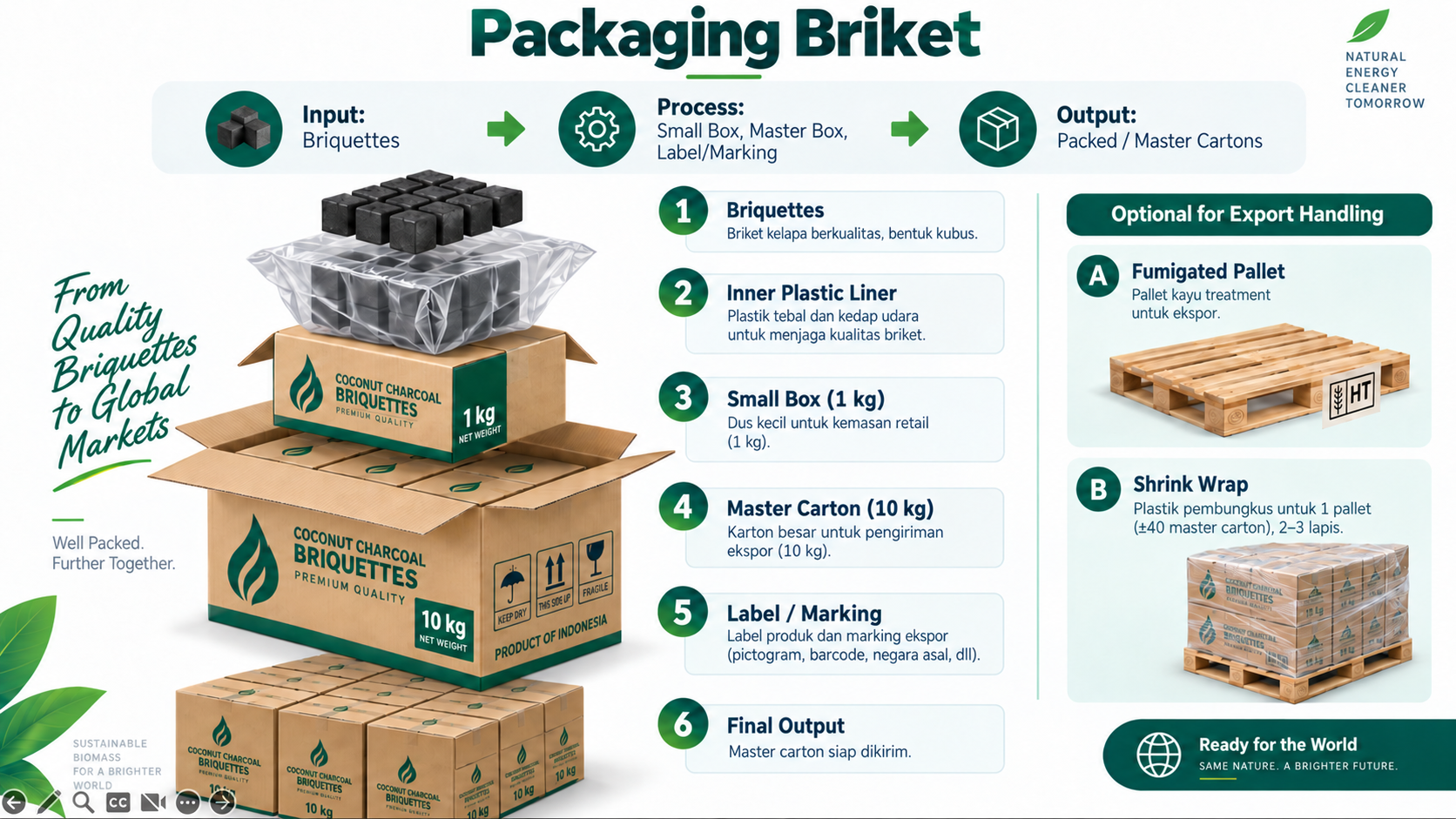
Illustration of export cartons; the final packing arrangement depends on the order.
Charcoal export packaging deserves attention long before a container reaches the port. Buyers need a practical plan that connects the product, retail pack, outer carton, booking, and arrival inspection. A clear checklist helps purchasing teams avoid mismatched labels, uncertain quantities, and late changes. These seven checks focus on the information that buyers and suppliers should agree before dispatch, without assuming that every order uses the same packing format or shipping arrangement.
1. Confirm the product before choosing the pack
Start with the application, grade, shape, and dimensions. A carton for small shisha cubes may need a different internal arrangement from a carton for long barbecue briquettes. Ask the supplier to confirm the actual pack layout for the selected product, rather than reusing measurements from another quotation. Record the net weight per retail unit, units per master carton, and any agreed weight tolerance. Keep a sample pack or clear photographs with the purchase specification so both teams share the same reference.
2. Check inner and outer protection together
Evaluate the complete pack, including the inner material, closures, dividers where applicable, and outer carton. Ask how the packaging handles routine movement and protects the product from contamination and moisture exposure. Request photographs of a finished unit and the packed master carton. For charcoal export packaging, attractive printing alone does not establish suitability. Agree how the supplier will check closures, carton condition, and handling performance before the order moves to the loading stage.
3. Separate net product weight from shipping weight
Use net weight for the charcoal itself and gross weight for the product plus its packaging. Ask the supplier to provide both figures at the relevant packing level. Include pallet weight and dimensions when the order uses pallets. Check the arithmetic across retail packs, master cartons, and total shipment quantity. Avoid estimating container capacity from charcoal weight alone; the final loading plan also depends on carton dimensions, handling arrangements, and the transport provider’s acceptance.
4. Approve labels before printing
Create one controlled artwork file with the correct product description, pack weight, batch reference, and buyer-approved text. Have the buyer confirm language, barcode, and destination-specific labeling needs with the appropriate local adviser. Ask the supplier to return a proof before printing the full run. Record the approval date and version number. If a change affects the product or pack quantity, check the related carton markings and commercial documents at the same time.
5. Coordinate transport acceptance early
Share the actual product description and proposed packing arrangement with the freight forwarder before fixing a dispatch date. Ask the responsible transport specialist to confirm current classification, documentation, packing, and carrier acceptance requirements for the shipment. Do not assume that a previous booking establishes approval for a new route or cargo. Keep the written acceptance conditions alongside the order file, and give the production team enough time to prepare the information that the booking requires.
6. Reconcile the dispatch records
Before loading, compare the purchase order, final packing list, carton markings, and agreed shipment quantity. Ask who will record carton counts, visible packing condition, loading photographs, and container or seal references where applicable. Assign one person to resolve differences before dispatch. Charcoal export packaging works best as part of a documented handover, with clear responsibilities and a named contact for questions. Keep document versions consistent so the buyer and logistics team review the same figures.
7. Agree the arrival inspection process
Define how the receiving team will check quantity, external damage, labels, and product condition. Agree what evidence the buyer should collect if a concern arises, including photographs and batch references. Clarify the notification process in the sales agreement before shipment. A receiving checklist also helps distinguish a packing problem from a quantity mismatch or an unrelated handling issue. Use the feedback to improve the next order and keep charcoal export packaging aligned with actual distribution needs.